Article by Nicholas Sesson Farre
Let’s set a scene: beads of sweat trickle down the foreheads of the fighters from the three kingdoms. The reds, the blues and the yellows, face each other in the heat of battle. You wouldn’t be wrong into imagining a medieval battle set in the English Countryside, yet what this reflects is China’s on-demand economy.
For a long time, it was a two-horse race between Meituan and Alibaba’s ELE.me, but this market was thrown into frenzy when JD.com entered. Their weapons of choice: cutting commissions, upgrading rider benefits and slashing prices down to zero. What followed looked and was argued by many regulators to be predatory pricing of unprecedented levels. These excessive price cuts and a dysfunctional market eventually led to necessary government intervention, in an attempt to stop the companies from spiralling into bankruptcy. In this article we will delve into how three tech giants had their profits run dry through headline-grabbing discounts designed to yank demand at any cost.
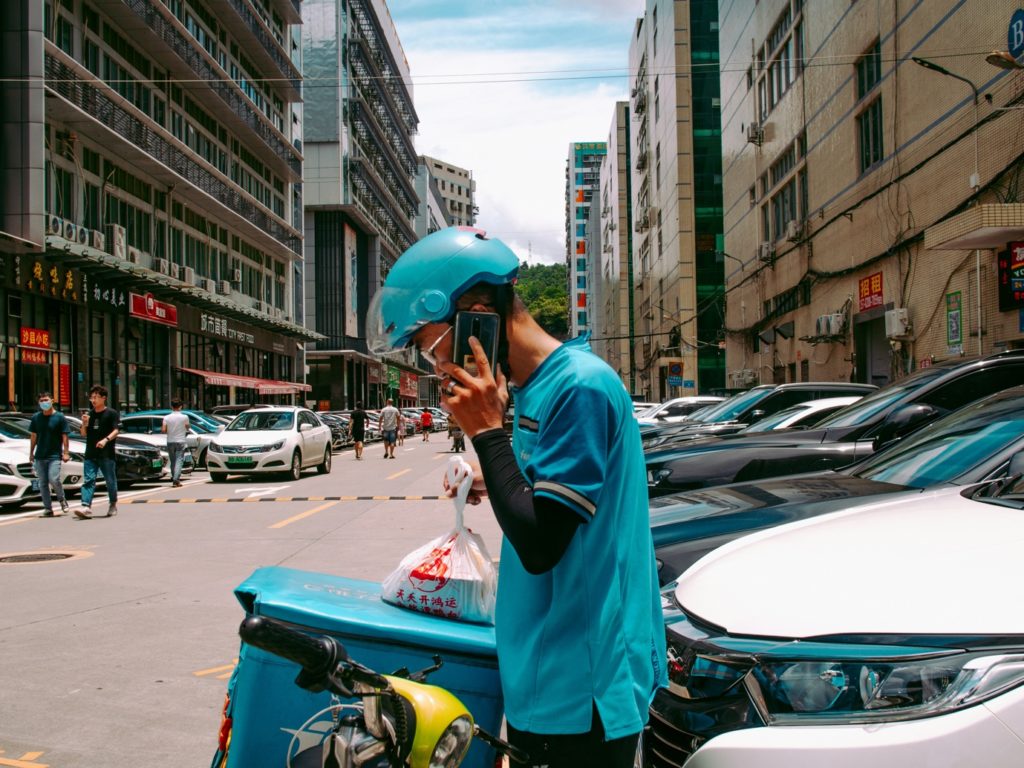
The first of the three combatants is Alibaba, often labelled China’s Amazon, one of the most well-known companies on the planet, let alone in China. It was started in 1999 in Hangzhou by the famous Chinese billionaire Jack Ma and his 17 colleagues. Its operations span marketplaces such as Taobao and Tmall, a logistics network through Cainiao, and a wide suite of cloud-computing services like Google’s Cloud. Alibaba’s acquisition of ELE.me for $9.5 billion in April 2018 reflected a bold move to take full ownership of the online food delivery company a major player in China’s delivery sector, easily identified by its fleet of blue-uniformed couriers. It was Alibaba’s effort to cement its power in China by expanding its “new retail” initiatives. These very initiatives underscored Alibaba’s push to blend online and offline commerce. In 2025, Alibaba tightened Ele.me’s integration with Taobao, its vast online marketplace, by launching an instant-commerce portal promising delivery in under an hour. Within weeks, it was fulfilling more than 40 million orders a day, doubling to 80 million at the height of promotional campaigns. Alibaba’s entry into a highly competitive food delivery market proved extremely successful, and by 2025 they controlled 33% of the market as the second most powerful company in what became a duopolistic market structure.
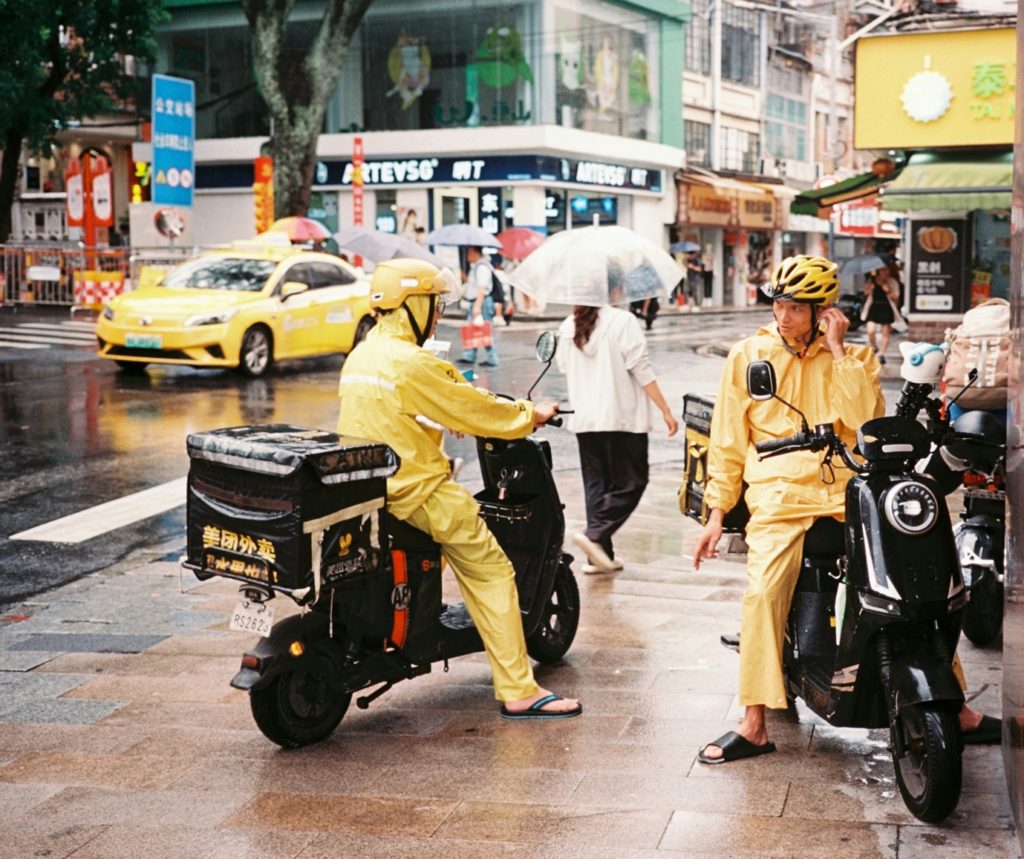
Next, we have Meituan, a company that was founded in 2010 as a Groupon-style deal site that evolved into China’s dominant local life super app. It eventually transitioned to the delivery market and quickly became the powerful market player with analysts estimating its current market control to be 65%. This in combination with ELE.me’s 33% control meant that the companies controlled of 98% of the market, a dangerous duopoly position for consumers. This situation inevitably contributed to a highly entrenched structure, causing incredibly high barriers to entry and making any new share grab incredibly expensive. In July 2025, Meituan reported a record 150 million daily orders across its food and instant retail categories. Furthermore, Meituan is known to have not always played a fair game and carries an antitrust fine from its “pick one of two” policy, which forced restaurants into exclusivity agreements by preventing them from listing on competing delivery apps, stifling competition across the sector. This policy led regulators to fine the company $534 million in 2021 and had a significant negative effect on the company’s reputation within China. Meituan’s drivers wear a distinctively yellow uniform, shown below.
The final contestant and the underdog of the 3 competitors is JD.com. It wasn’t the first time that JD had attempted to break into the delivery market, having previously tried to do so unsuccessfully in 2015 through a service called JD Daojia. It struggled which was historically a first-party e-commerce/logistics powerhouse. JD re-entered the takeaway market in February 2025, a dangerous attempt at trying to enter and usurp two tech giants.
How JD.com lit the fuse
The moment that JD entered the market all hell broke loose, with its first move leading to a labour reset. It didn’t just dangle coupons in the eyes of potential customers; it reframed the labour market by promising to sign riders to full social insurance and a housing fund, raising the bar industry-wide. Meituan decided to respond immediately on the very same day by scrapping certain overtime and late delivery penalties. In addition, it committed to pay social insurance for its full-time and stable part-time riders from Q2 2025. This was all an effort to build harmonious labour relations by pretending that these decisions had been under development since 2022, when they had only been the created in response to the now threatening competition posed by JD. With this strategic move JD managed to squeeze itself in and scavenge a market share of 4-5%. What followed would be the norm as the companies competed; JD publicly accused rivals of pressuring riders who accepted its orders, while Meituan denied wrongdoing, and the “war of words” wiped billions from market caps.
Then, JD decided to drop a massive campaign which granted me discounts nationwide. Low prices ranging from 0.01 meals and 50% discounts reigned across the country as JD attempted to stimulate demand for its new platform and gain market share. The competitor soon follows it, and the competition is labelled as the fight of the three kingdoms, with steady orders hitting a record 150m daily amid the heated battle between JD.com and Alibaba. JD publicly denounced its competitors on social media, something which is regular occurrence in China but a foreign concept for most executives in the West. All of this occurred while ELE.me continued to retain its market position in the shadows, and once they saw the intense competition they were facing, they went to their own parent company, Alibaba, and duly received $7.3 billion in fresh funding.
The fierce price war only led to more discounts, which drained industry profits even more, and as mid-July came, Meituan released a fresh batch of new discounts. The media dubbed it a three-way fight as JD and Meituan publicly sparred, and Alibaba leaned in with its Taobao instant commerce and Super-Saturday Flash events. Merchants on TaoBao Flash saw big non-food category month-over-month surges during July promotions. Amid the order frenzy, Meituan hit a stunning 150m daily orders, while Alibaba’s instant commerce exceeded 40 million daily orders within weeks. Furthermore, JD had over 25m daily orders at its peak, driving a flood of rider tasks.
This order influx had a positive effect for many riders, with social media being flooded by screenshots of riders showing ¥1000-¥1700-day earnings during peak demand. But those wins weren’t representative of typical earnings and came with extreme routing pressure. There were plenty of examples where consumers ordered items that simply didn’t arrive and we’re being messaged by riders and at the same time you had people ordering different things to what was delivered. Furthermore, there was a massive financial impact on the 3 company’s stock margins profits in stock moves in 2025 being greatly affected by this price competition that eventually led to government intervention. With zero one or free promo proliferating the China’s State Administration for Market Regulation (SAMR) summoned Meituan, ELE.me and JD in mid-July, ordering them to comply with the e-commerce anti-unfair competition laws by making them promise to stop excessive subsidy escalation.
Looking at the financial impacts of this wild west affair, it is very clear that it had a long-lasting and profound effect on both performance and the financial health of the three companies involved. Meituan’s revenue increased by +12% YoY to 91.8b RMB but adjusted net profit was down 89% YoY as subsidies and incentives ballooned costs and bled their finances dry. JD similarly experienced increased revenue in Q2 2025 of 357B RMB, which was an increase of 22% YoY. However, its profit margins were greatly compressed, going from 4.3% a year earlier to 1.7%, an indication that the impacts of instant delivery investment would drag onwards. Alibaba was the least hit of the group and came through the quarter much steadier, with its revenue reaching 240B.
All in all, subsidies and discounts torched company profits, invited regulators back into the conversation and forced everyone to decide whether market share or margins matter more over the coming year. Even after the SAMR’s intervention, subsidies continue to reign on as instant retail in China continues to be an engine for growth. Alibaba has reported that its TaoBao instant commerce topped 40m daily orders within a month, so the high demand may be here to stay. As instant retail goes beyond food, analysts project the market will more than triple by 2030 to $352B as the delivery market develops beyond just meals; it can now be everything from groceries to pharmacy and small electronics. There are a few competitors to watch that may try and usurp the incumbent firms:
1. The first of them is Pinduoduo (Duoduo Maica): an online Chinese retailer which pilots instant retail infrastructure that was founded in 2015 and is currently headquartered in Shanghai. With its slogan of “Together, More Savings, More Fun”, we can expect it to be right at home within a market characterised by large discounts. In the future expect aggressive grocery-led promotional campaigns where Pinduoduo is at its strongest.
2. Then we have SF Intra-City, a third-party courier that is currently the largest independent third-party on-demand delivery platform in China. Its instant delivery service currently covers a wide range of items, including food, fresh produce and flowers. Its growing revenue and merchant base gives merchants an alternative to platform fleets, and it currently poses a threat to the 3 tech giants controlling the game.
3. Lastly, we have the short-video platforms such as Douyin (the Chinese version of TikTok) and Kuaishou. building off order-in-feed journeys, they have the potential to greatly disrupt the market with their unique selling point: you’re watching the food being reviewed, so why not just order it directly from the app? Today they hand off fulfilment of orders to Meituan and other third parties, but tomorrow they could leverage their credible demand funnels and enter as strong market participants.
Only time will tell whether these potential competitors may turn the war into one of more than 3 kingdoms, but the signs show us that the incumbent firms market control may not last for much longer.
This has happened elsewhere: the EV price war playbook
China’s EV sector ran an extremely similar script where large price cuts and discounts eventually led to the collapse of profitability margins for big market players such as BYD, Nio and XPeng. In the middle of 2025, China’s Ministry of Industry and Information Technology and other regulators ended up warning carmakers to stop with their ‘disorderly price cuts’, citing that there was overcapacity coupled with “involution” (intense and self-defeating price competition) that was negatively impacting competition within the sector. The Chinese government even launched quality/consistency inspections as exports ramped up as a relief valve, leading to US sanctions and tariffs on Chinese EVs as well as any countries that bought from them (such as Mexico). If discounts and price competition continue to occur in the delivery market, we can expect similar government and regulatory intervention with guidance against excess subsidies and more forceful nudges towards ‘healthy competition’.
As the Chinese government faces disinflation and deflation risk with its CPI currently sitting at 0.2% it is faced with a difficult quandary as its economy is also experiencing weak economic growth of 4.8% (below its goal of 5%) driven by a property crisis and weak domestic demand. Consumers are remaining cautious as the government uses targeted stimulus such as trimming their policy rate by 10 bps to 1.4% and government bonds with much longer-maturities of 20-50 years to fund public investment. These steps should support growth, but they do not reflect a giant stimulus package which would help unleash large amounts of consumer expenditure. What is clear however, is that they need to get price wars such as the ones raging on in the delivery market and across the economy under control or risk companies suffering. Furthermore, they must also incentivise individuals to spend now-not wait for potential discounts-through potential stimulus packages. Policymakers will need to restore household confidence and incomes before spending will re-accelerate, and the Chinese economy returns to the booming growth phase we once saw.
0 Comments