Article by Alexander Tvaladze
For anyone even slightly obsessed with history, it’s hard to avoid stumbling across the name Canton. It’s almost impossible to find any other settlement that might have influenced the history of China and the world so much. Canton has definitely changed its appearance, but also its name. It’s ranked as the third most populous city in China, with a current population of 19 million people,. Nevertheless, the soul and the function have never gone; Guangzhou remains the main trade hub for the Chinese economy. Once a crowded port, full of merchants from Portugal, Britain, Persia, Africa, India, and China, Guangzhou continues to attract substantial amounts of investments and tourists.
Situated on the magnificent Pearl River, near Hong Kong, its southeast location and direct access to the South China Sea have all been huge strategic advantages for the city. Its position ensured a natural connection between inland China and the rest of the world, facilitating economic and cultural exchange. The city covers almost 7,400 square kilometers and serves as the capital of Guangdong Province, one of China’s economic powerhouses. Ideally balanced warm climate is why Guangzhou has earned its nickname “Flower City”. Flowers bloom year-round in its parks and along its avenues.
Now let’s turn to the historical function and importance of the famous Canton.
According to some historical accounts, the city was founded in the 9th century BC. The city gained more power and importance during the Qin dynasty (221 – 206BC), when the emperor Qin Shi Huang unified China’s fragmented states into one consolidated empire. Under Tang (618-907) and Song (960-1279), Guangzhou became the main port of the country, connecting the Chinese mainland with Africa, Persia, and India. By the 18th century, the Chinese government introduced the Canton System, limiting all foreign trade to just this one city. However, as the Europeans became leaders in marine and shipbuilding, Canton, with its unique location and exceptional strategic importance, became an immensely attractive place for European superpowers, including the Dutch, Portuguese, and most notably British. Interestingly even the very name Canton is an European one that was mistakenly attributed to the city instead of the province. The British East India Company traded silver and opium in exchange for porcelain, tea, and silk while the European settlements multiplied on the coastline. Nonetheless, the Qing government, observing the deadly effects of opium flow in the country, banned any import and trade with the rest of the world, including Canton, forcing China into full isolation. These events led to the famous Opium Wars, which resulted in British victory and strengthened England’s position in Asia for the following century. Ironically, the same city that once symbolized foreign pressure layer became a heart of Chinese resistance against European and British rule. Sun Yat-sen, the founding father of China, started his revolutionary movements in Guangzhou. Since the 1980s, Guangzhou has served as the leading place for Chinese economic development and innovation, changing not only the course of Chinese history but also shaping the innovative future of the world, as it has many times in the past.
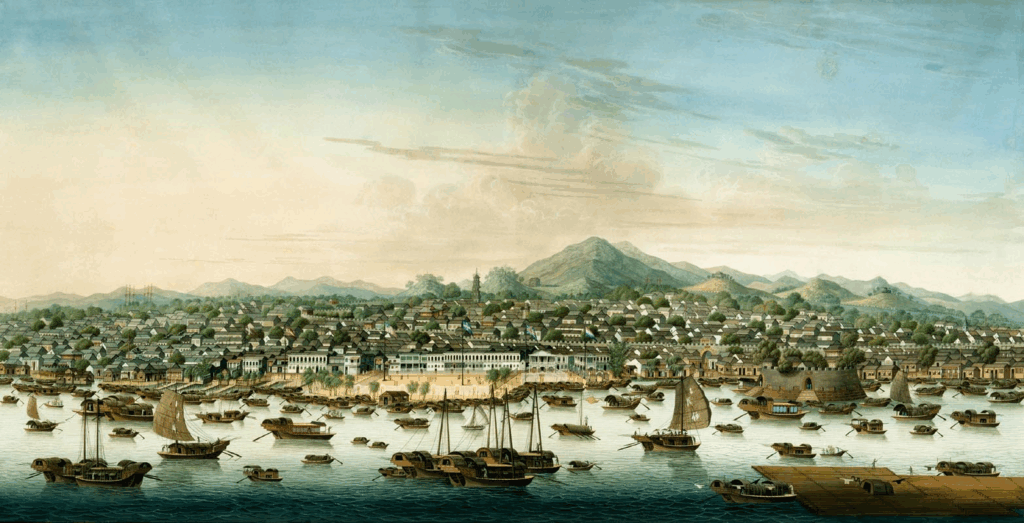
Today, Guangzhou is one of the wealthiest cities of China, serving as an important node of the Pearl River Delta. Alongside Hong Kong, Macau, and Shenzhen, Guangzhou contributes a massive share of China’s GDP and is a global leader in manufacturing and technology. The city is the home of big companies, including Guangzhou Automobile Group and Zhujiang Brewery. For those who are interested in business fairs, Guangzhou offers the oldest Chinese trade event called the Canton fair. It attracts buyers and manufacturers from all over the world, and, as centuries ago, this variety of cultures contributes to Guangzhou’s exceptional cultural heritage.
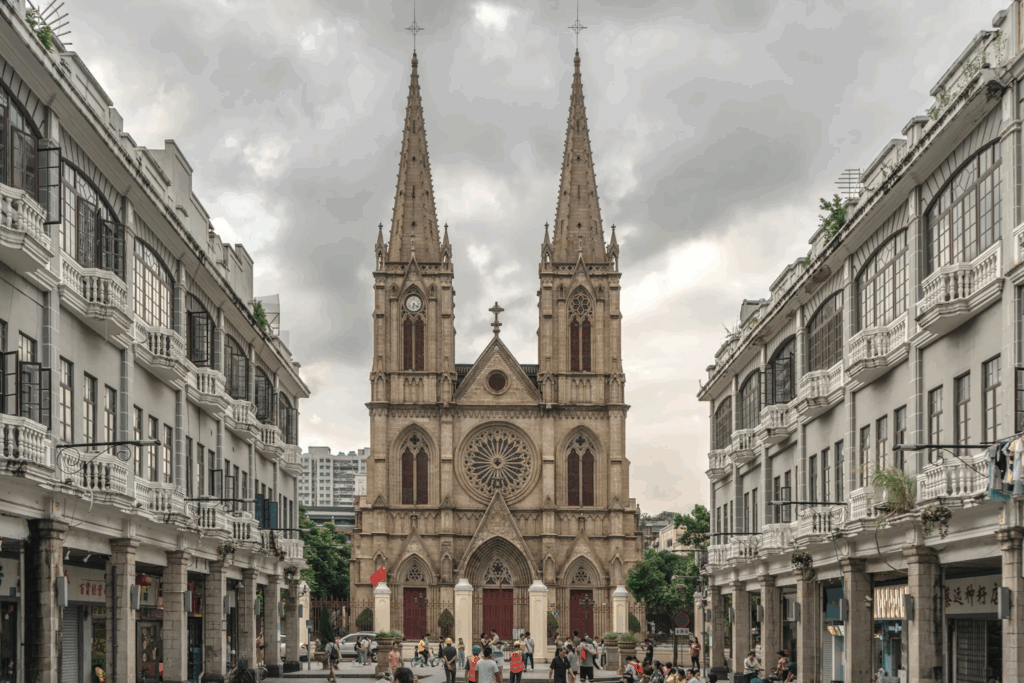
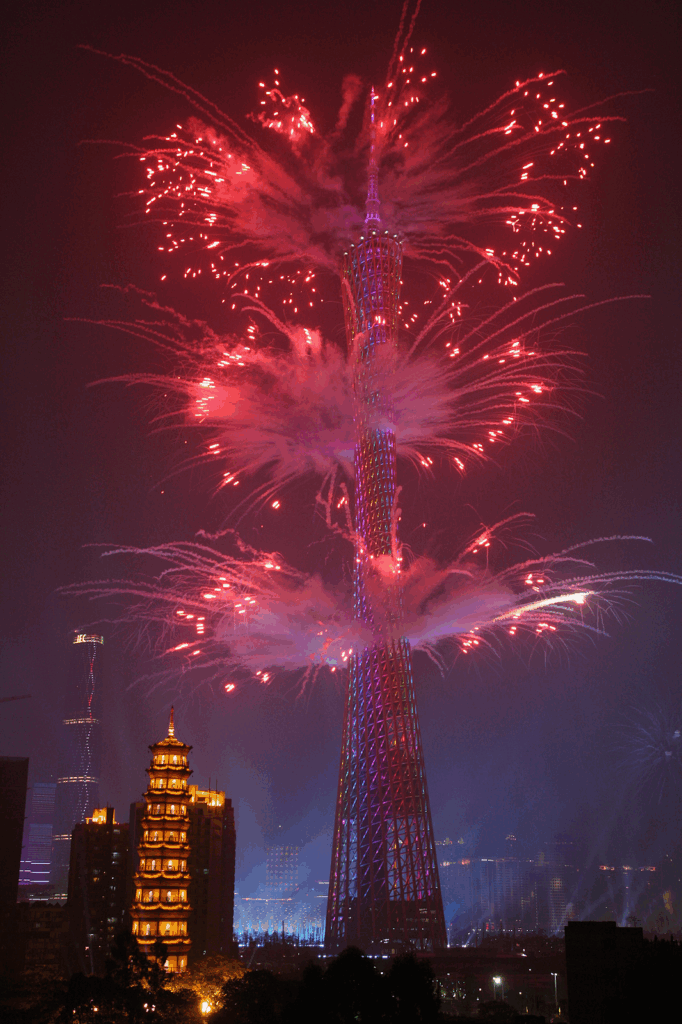
Even though Mandarin Chinese serves as an official language of the city, the Cantonese language is still widely spoken among the citizens. For those who seek an exceptional Cantonese experience, it’s recommended to visit the Opera. Exceptional music, acrobatics, martial arts, and acting resonate with China’s history, full of greatness, wisdom, and battles for independence. The Opera and the river stand side by side, symbolizing the eternal flow of the music, its power to enrich culturally as once Guangzhou was enriched economically. The visitors can also feel the European influence on the northern bank of the Pearl River, at the heart of an old district. The Gothic Cathedral, which serves as the seat of the Archbishop of Guangzhou, reminds visitors of the multicultural wealth and the history of Canton. It is one of the few cathedrals in the world to be entirely built of granite. Alternatively, visitors can see the temple of the six Banyan Trees – the Buddhist temple that amazes the viewers with its architectural art and flower pagoda shape.The Zhujiang New Town district is known for its skyscrapers, including the famous Canton Tower, which rises into the sky. The tower symbolizes the current economic and political weight of the city, its influence on global trade and innovation. If anyone gets a chance to visit Guangzhou in November, it’s a must to attend the “Guangzhou International Light Festival”. This sightseeing transforms the city into a picture full of vibrant colors and lights. This variety of colors is not just breathtaking, but symbolic as well, showing how Guangzhou brought all of the most beautiful cultures of the world into one place.
Furthermore, the city is the birthplace of dim sum, an array of delicate steamed, baked, and fried dishes: shrimp dumplings, pork buns, egg tarts, and rice noodle rolls. The ritual of yum cha (drinking tea) makes families and friends gather around round tables, chatting and enjoying the sweet evening.
Guangzhou is more than just a city – it is a living chronicle of China’s resilience and path to greatness. To walk through Guangzhou is to travel through centuries of history and to glimpse, with every skyline, the boundless future of Guangzhou.
0 Comments