Article by Huang Denis
Nanjing sits where leafy boulevards meet one of the Chinese mother rivers. It’s a city that pairs vast Ming-era walls and solemn memory with lakeside views as well as scholarly ambience, not to mention the delicious soups you can find in eastern China. So if you’re looking for a destination with historic, cultural, and culinary wonders, then Nanjing might be your place.
Set on the lower Yangtze(长江), Nanjing has been the capital for 6 dynasties and early Ming, as well as the Republic of China. The history of these lies in the manyfold historical elements such as gate towers, mausoleums and museums ever present in the city. Nowadays, it’s a university hub, for this reason the streets look bookish, bike-friendly and the cafès full. Four seasons shape the city in gorgeous manners: plum blossoms in late winter, lotus on the lakes in summer, maple reds in autumn, so the city feels different with every visit.
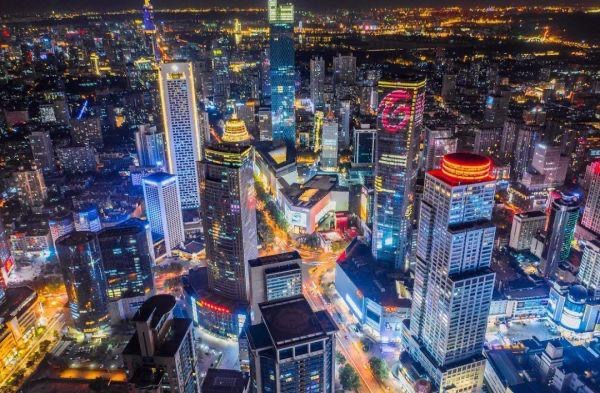
In order to unveil the city’s history, we must begin with the Ming City walls and the Xuanwu Lake. A walk here offers an amazing skyline and water view, dropping down to the Lake’s islands for a breath amongst the blossoming lotus when it’s the season.
The Laomendong Historical District, literally “East of the Old Gate”, built during the Eastern Wu period (222–280 A.D.), has burst into a vivid commercial center, while preserving its wooden structure, providing a glaze into the deep history of Chinese southeastern villages and a wandering between the harmonic blending of tradition and modern really immerses the visitors into a different world.
Nearby, the Fuzi Miao, temple to Confucius resides on banks of the Qinhuai River, dates back to the 11th century. It does not only offer a view into the traditional architecture as well as Confucianism, but it’s more known for the district’s illuminated evening scene, creating a stunning modern lightshow merged into the history of the people.
Right in the same area, the Zhanyuan garden can be found. If you are more into the natural world in blend with the city, then this place offers the exact thing you are looking for.
If you are more of a museum kind of person, interested in the discovery of knowledge with guiding inscriptions, then the Nanjing Museum and the Memorial Hall of the Nanjing massacre are the places for you. The first is the oldest national museum built by the Chinese government, it offers artifacts from the Ming and Qing Dynasties as well as the renowned Han dynasty ox-shaped bronze lamp with a total of over 430,000 objects. It offers a vast array of galleries, ranging from art, history to digital and Intangible Cultural Heritage. Truly a welcoming place for everyone. Furthermore, the access is free, though it requires online reservation. The latter is a solemn museum built to memorialize and document the victims and the atrocities during 1937-1938, when this very city was the capital. Thus, the place to come if you need to recenter your day.
Cradled by the Yangtze River, Nanjing is a city that feels alive in every sense —To truly know Nanjing, you have to taste it, walk through it, and feel its pulse from sunrise to sunset.
Nanjing’s story often begins at the dining table. Food here isn’t just sustenance — it’s heritage. Locals speak about their cuisine with pride, and it shows in every dish. The famous Nanjing salted duck is a perfect introduction: tender, fragrant, and delicately seasoned, a recipe perfected over centuries. Wander through the lively Confucius Temple market, and your senses come alive — the aroma of duck blood soup simmering in pots, the sweetness of sticky rice cakes, the sizzle of shengjianbao (pan-fried buns) crisping on the grill.
But Nanjing isn’t trapped in tradition. In neighborhoods like Xinjiekou and Laomendong, stylish cafés and experimental restaurants mix local flavors with modern flair. Whether it’s sipping a latte in a minimalist coffee shop or sharing fusion dim sum with friends, the city’s evolving food scene captures its spirit: grounded in history, yet always curious.
Every corner of Nanjing seems to tell a story. The mighty Ming City Wall still guards the heart of the city, offering sweeping views that stretch beyond time. The Nanjing Art Museum and the Presidential Palace reveal a city shaped by resilience, creativity, and transformation. Come evening, stroll along Fuzi Miao (Confucius Temple) and you’ll see the city at its most charming — lanterns reflected on the Qinhuai River, students laughing over street snacks, families gliding by in boats. It’s a scene that feels timeless yet alive, where everyday life and tradition flow together.
By day, Nanjing moves with purpose — students filling libraries, professionals crowding cafés, locals cycling through tree-lined streets. But when night falls, the city changes tempo. The 1912 district glows with music and conversation, its rooftop bars and jazz lounges buzzing with a cosmopolitan vibe. Street performers play beneath warm lights, and small eateries stay open into the early hours, serving comfort food to night owls and dreamers alike.
Nanjing is a city that invites you to slow down and take it all in. It doesn’t demand attention — it earns it, gently, through every flavor, every melody, and every moment that lingers long after you’ve left.
0 Comments