Article by Jian Pan
Introduction
In the context of globalization, cultural competence has become a fundamental component of effective international business practice. Understanding how social norms and symbolic behaviors shape professional interactions is particularly relevant when engaging with cultures where relationships play a central role. In China, two key concepts that illustrate this dynamic are hongbao (red envelopes) and guanxi (关系), often translated as networks of relationships.
This article provides an overview of these concepts and examines their relevance in both social and business contexts.
Hongbao: Meaning and Cultural Significance
A hongbao is a traditional red envelope containing money, typically exchanged during significant life events such as Lunar New Year, weddings, and other celebrations. The color red is culturally associated with prosperity, luck, and protection against negative influences (China Highlights, 2023).
Importantly, the meaning of the hongbao extends beyond its monetary value. It functions as a symbolic gesture that communicates respect, goodwill, and social recognition. As such, it reflects broader cultural values related to harmony, reciprocity, and interpersonal sensitivity.
Occasions of Use: Social and Professional Contexts
Hongbao are widely used in personal and social settings, including:
- Lunar New Year celebrations
- Weddings and family ceremonies
- Births and personal milestones
In addition, their use can extend into professional environments. In some corporate contexts, hongbao are distributed during festive periods (e.g., Chinese New Year) or significant organizational moments, such as company openings or achievements. These gestures are generally intended to express appreciation, reinforce morale, and maintain positive relationships (Yang, 1994).
While such practices may appear unusual from an external perspective, they are often embedded in culturally specific norms governing social exchange.
Symbolism over Monetary Value
A key feature of hongbao is the predominance of symbolic meaning over financial value. The act of giving is often more significant than the amount itself.
Elements such as timing, context, and numerical symbolism (e.g., preference for auspicious numbers like 8) contribute to the interpretation of the gesture (Hwang, 1987). This reflects a broader emphasis on relational balance and the maintenance of social harmony.
Guanxi: The Relational Framework
To understand the role of hongbao in business settings, it is essential to consider guanxi. Guanxi refers to a system of social networks and influential relationships that facilitate cooperation and mutual benefit.
According to Gold, Guthrie, and Wank (2002), guanxi is based on long-term reciprocity, trust, and the ongoing exchange of favors. Within this framework, social and professional interactions are interconnected, and relationship-building is often a prerequisite for successful business engagement.
Practices such as gift-giving—including hongbao—can therefore be interpreted as part of a broader relational strategy rather than isolated economic transactions.
Cross-Cultural Interpretations
From a cross-cultural perspective, practices like hongbao may be interpreted differently depending on local norms and regulatory frameworks. In some Western contexts, gift-giving in professional environments may raise ethical concerns, particularly in relation to transparency and anti-corruption standards.
However, these interpretations are shaped by distinct cultural and institutional frameworks. As Hofstede (2001) suggests, differences in values—such as individualism versus collectivism—can significantly influence how business practices are perceived and evaluated.
The Importance of Cultural Awareness
Cultural awareness is essential for navigating international business environments effectively. Misunderstanding culturally embedded practices such as hongbao may lead to miscommunication, reduced trust, or ineffective collaboration.
Conversely, developing an informed understanding of local norms enables individuals and organizations to:
- build stronger professional relationships
- enhance communication across cultural boundaries
- reduce the risk of misinterpretation
Conclusion
Hongbao and guanxi represent key elements of Chinese social and business culture, reflecting a broader emphasis on relationships, symbolism, and reciprocity.
Rather than viewing these practices through a purely external lens, it is important to situate them within their cultural context. Doing so allows for a more nuanced understanding of how business interactions are structured and maintained in China.
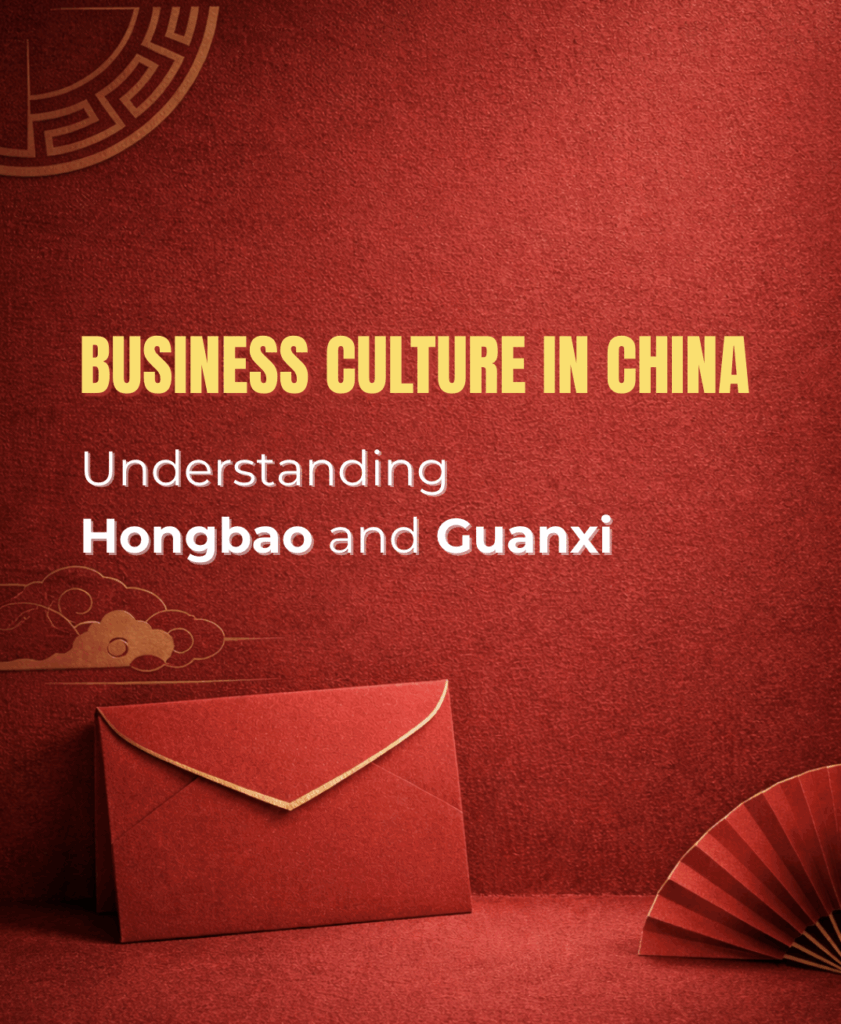
click the link below to see full slides carousel:
References
China Highlights (2023). Red Envelopes (Hongbao) in Chinese Culture.
Gold, T., Guthrie, D., & Wank, D. (2002). Social Connections in China: Institutions, Culture, and the Changing Nature of Guanxi. Cambridge University Press.
Hofstede, G. (2001). Culture’s Consequences: Comparing Values, Behaviors, Institutions and Organizations Across Nations. Sage Publications.
Hwang, K. (1987). Face and Favor: The Chinese Power Game. American Journal of Sociology, 92(4), 944–974.
Yang, M. M. H. (1994). Gifts, Favors, and Banquets: The Art of Social Relationships in China. Cornell University Press.
This article provides a simplified academic overview for educational purposes and does not represent all practices across China.
0 Comments