Article by Anhe Zhu
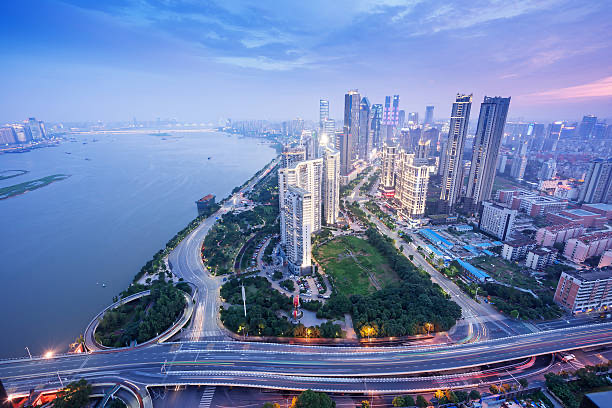
At the heart of central China, Wuhan stands where the Yangtze and Han Rivers join. The hustle and bustle of the city provides both ancient and forward-looking feelings. As the capital of Hubei Province, Wuhan bridges north and south, old and new, water and steel. Its rhythm is steady, shaped by students, merchants, and the constant movement along the riverbanks.
Wuhan’s story begins with its geography. It is divided into three historic towns : Wuchang, Hankou, and Hanyang. The city’s identity still reflects that trio. The Yangtze River cuts through it, crossed by the famous Wuhan Yangtze River Bridge, China’s first major bridge over the river. Along the water, life unfolds in full view: ferries crossing, joggers tracing the levee, and street musicians performing under the shade of plane trees.
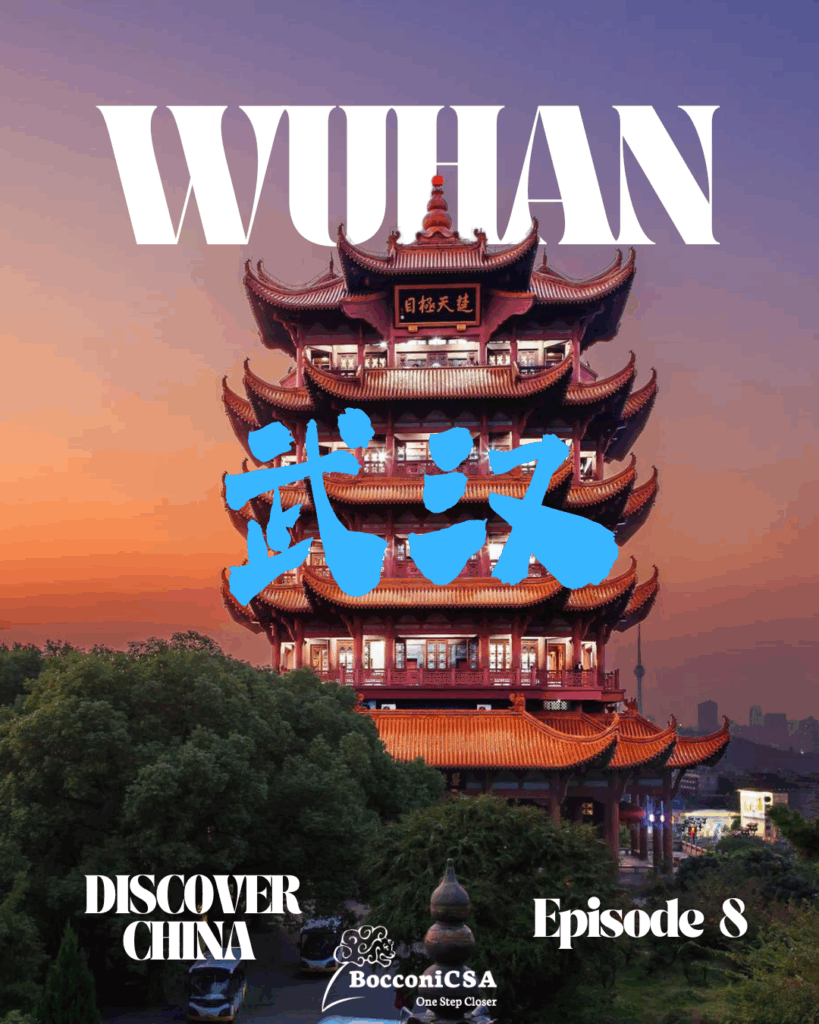
One of the main symbols of the city is The Yellow Crane Tower. It rises above the Yangtze with sweeping views. Its golden tiles and layered eaves recall legends of immortals and travelers who once paused here to look out at the endless river. In contrast, the Hubei Provincial Museum showcases exquisite bronze bells from the ancient Zenghouyi Tomb, a reminder that Wuhan’s roots reach deep into early Chinese civilization.
When the day warms, East Lake, one of China’s largest urban lakes, offers calm. Here, cyclists can weave along the waterfront, while rowboats drift past willow trees that hang over the water. Not far away, the Optics Valley area represents Wuhan’s modern drive, full of technology firms, glassy malls, and university campuses buzzing with innovation.
Hearty and immediate food makes Wuhan even more attractive. Re gan mian are a morning ritual: they are hot dry noodles made of sesame paste, chili oil, and pickled vegetables stirred together before work. Furthermore, the city’s night markets come alive with skewers, grilled fish, and bowls of duck necks spiced to a fine balance of fire and fragrance. Every district has its own rhythm of flavor, from riverside seafood to rich stews simmered in clay pots.
The city wakes early, thrives on conversation, and values both study and leisure. With dozens of universities, youthful energy flows through cafés, bookstores, and parks. Locals stroll the river promenade at sunset, playing cards or dancing to portable speakers.
Moreover, Wuhan is one of China’s largest inland cities, home to over 11 million people. It’s a major transport hub — the crossroads of China’s rail network and a growing center for advanced manufacturing and education. Summers are famously hot, earning it a place among China’s “Three Furnaces,” but the humidity comes with the reward of lush greenery and long evenings beside the river.
What stays with you after leaving Wuhan is its sense of balance — water and bridges, tradition and invention, the slow pace of a lakeside walk and the pulse of a city looking forward. At the confluence of two great rivers, Wuhan feels like the country itself, flowing toward the future while always remembering where it began.
0 Comments